


SOC 2026: When AI Becomes the Analyst’s Co‑Pilot
What is a SOC? Discover how it detects cyberattacks with real examples of anonymized logs. A practical guide for beginners and professionals alike — warning signs, tools, behavioral AI, and the complete workflow behind a successful detection.
CYBERSECURITY
Abderazek B.
2 min read
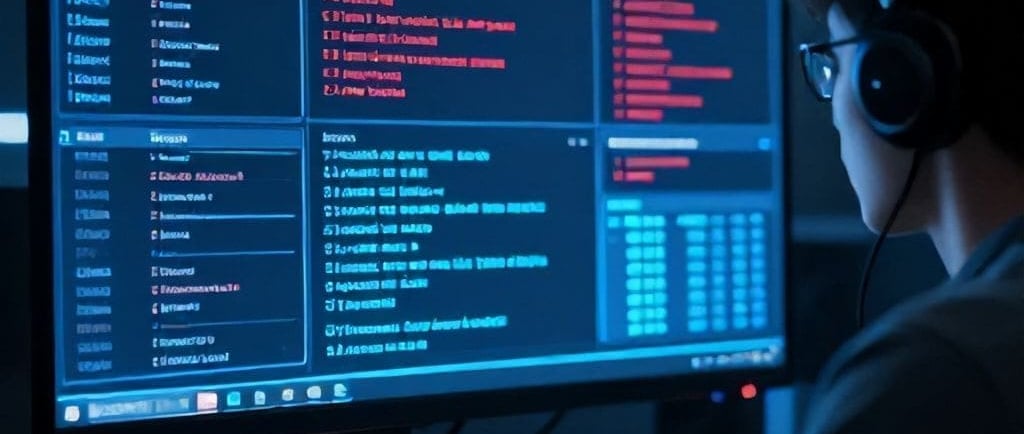

1. What is a SOC in 2026?
A Security Operations Center (SOC) is your 24/7 digital guard.
It continuously monitors event logs from your computers, servers, networks, and cloud environments to detect abnormal behavior.
By 2026, even a mid‑sized business can generate over one million logs per day — yet only the ten most suspicious events reach a human analyst, thanks to behavior‑based AI filtering.
The four main log sources:
📱 Endpoints: antivirus, EDR (Defender, CrowdStrike)
🌐 Network: firewalls, routers (Cisco, Fortinet)
☁️ Cloud: access logs, API calls (Azure, AWS)
👤 Identities: Active Directory, SSO authentications
🔍 2026 evolution:
AI doesn’t replace the analyst — it reduces the noise.
Example: a service account connects from Russia at 3 a.m. using curl instead of GitLab Runner → instant alert.
2. Attack #1 – Compromised Service Account
Scenario: a GitLab CI/CD service account compromised
(svc‑deploy@enterprise.com)
Suspicious log (Azure AD)
IP: 185.220.101.50 (TOR exit node)
Agent: curl/8.4.0 (instead of GitLab Runner)
Time: Tuesday 9:15 a.m.
Why it’s suspicious
Service accounts (“svc‑”) never use curl manually.
A TOR IP hides the source — typically malicious.
The timestamp doesn’t match any scheduled deployment.
SIEM rule to implement
IF account starts with “svc‑” AND IP ∈ TOR or foreign country
AND agent = curl/wget → HIGH PRIORITY ALERT
3. Attack #2 – Lateral Movement via SMB
Network logs:
Connection from svc‑deploy to k8s‑master‑01 over SMB,
three failed logins, then attempt to access admin$.
EDR logs (target server):
Process: powershell.exe running a Base64 script
Hidden indicator: execution of mimikatz.exe
External communication: every 30 s → 91.219.237.44
SOC Detection
🔴 Threat Score : 92 / 100
MITRE Techniques: T1003 (Credential Dumping) + T1071 (Command and Control Beaconing)
Recommended Action: isolate both source and target.
4. Attack #3 – The Ransomware in Preparation
The attacker gains admin privileges and deletes backups.
Critical Windows & Cloud logs:
- WMIC.exe deletes VSS shadow copies
- Simultaneous removal of volume /prod‑data (AWS EBS)
- Root account compromised
AI Correlation:
🔥 Composite Score: 98 / 100
Detected pattern: TOR IP + credential theft + backup deletion
Automatic response: endpoint isolation + forensic snapshot
Detection time: 4 min 32 s
5. The 5 Essential SOC Detection Rules
🚨 RULE #1 – Suspicious service accounts
service‑* + TOR IP + curl/wget = RED ALERT
🚨 RULE #2 – Lateral Movement via SMB
3 failed auth + admin$ command = ISOLATE SOURCE
🚨 RULE #3 – Pre‑Ransomware Activity
WMIC.exe + shadow copy deletion = MAX URGENCY
🚨 RULE #4 – C2 Beaconing
Repeated outbound connections every 30 s = QUARANTINE
🚨 RULE #5 – Cloud Kill Chain
EBS volume deletion + root account use = ISOLATE ACCOUNT
Recommended tools:
- Elastic Security – MITRE rules built in
- Microsoft Sentinel – optimized for Azure/M365 environments
6. SOC 2026 Workflow
Response chain:
[AI ALERT] → [HUMAN ANALYST (2 min)] → [NETWORK CONTAINMENT]
↓
[ENDPOINT ISOLATION] → [FORENSIC ANALYSIS] → [THREAT HUNTING]
Example post‑incident dashboard:
⏱️ Detection time: 4 min 32 s
🔒 Endpoints isolated: 2 / 2
📊 IoCs extracted: 17 (IPs, hashes, domains)
✅ Outcome: No data loss
7. Limits of AI Automation
Even the best SOC AIs need constant oversight and auditing.
Common risks:
- False positives triggered by legitimate but unusual behavior.
- Faulty correlations from biased or poorly trained models.
- Blind spots facing new zero‑day techniques.
➡️ In 2026, the winning equation remains:
AI + Human Analyst + Field Experience.
8. Conclusion – The Modern SOC Starts Now
A SOC in 2026 detects attacks through behavioral correlation rather than static signatures.
The five rules above cover roughly 80 % of common incidents, while AI‑driven behavior analysis handles the rest.
🎯 Goal for an SMB: Detection and containment in under 15 minutes.
Which rule will you test first?
Have you ever seen a compromised service account?
Share your SOC experience in the comments 👇
Learning
Knowledge sharing in system administration, networking, and cybersecurity
Community
Technology
contact@cybersurf-
© 2024. All rights reserved.